MRB dispositions
A shaft comes off the mill with a critical diameter outside print. The part gets tagged. The work order stops. The call that unsticks it needs quality, engineering and operations free at the same time.
Hazardous waste facilities
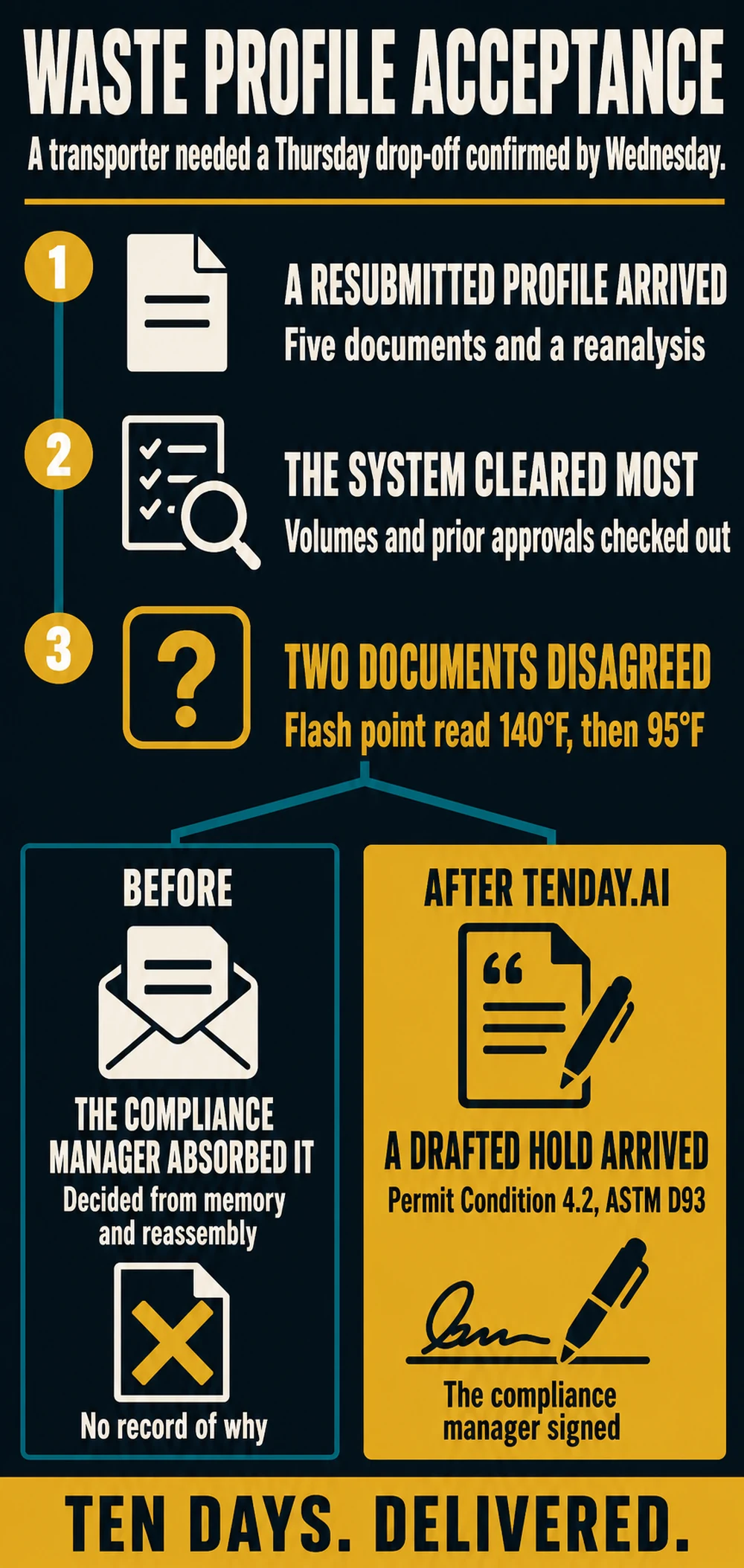
A transporter calls Wednesday to confirm a Thursday drop-off. The profile for that stream came back eleven days ago, after a lab reanalysis. It is still sitting behind four others. Approving it correctly means reading five documents at once, against a permit that lives in a different binder.
The gap
The agent does not resolve a contradiction between two documents by preferring the newer one. It holds the profile. It names the missing evidence and quotes the permit condition that decides the question. Nothing is approved or rejected while the flash point is in dispute. What goes away is the hour of document reassembly it now takes to learn that much.
Where the tools stop
The call is facility specific. Is this waste compatible with this treatment train, inside this permit's limits? And what does the site carry if the answer is wrong? That depends on one operator's permit and waste acceptance plan, not a shared classification database. Owning the decision means owning the liability. A vendor selling seats across hundreds of facilities is not built to carry that. So it routes the packet to a person and stops.
Collects and versions waste profiles, routes them for approval, and sends alerts when something is expiring or has been rejected. The approval itself stays a human facility decision made outside the tool.
Reads safety data sheets and paper profiles to predict regulatory classification, and can auto-submit through customer portals. That is generator-side work; the company's own roadmap places cross-party facility approval at 2027.
Advertises waste approval workflows that route hazardous streams for review based on rules. The product page could not be independently confirmed at the time of this review, so the claim is worth checking with the vendor directly before ruling it out.
What changes
The engagement builds one agent. It reads the profile, the safety data sheet and the lab analysis. It also reads the generator certification and the prior approval history. It checks each one clause by clause against the facility permit and waste acceptance plan. It drafts APPROVE, HOLD FOR EVIDENCE or REJECT, with a cited reason. Each draft carries a confidence score and the follow-up evidence needed. The compliance manager reviews and signs. The agent approves nothing itself.
Drafted recommendation, awaiting signature
What the engagement needs
Two documents: the facility permit and the waste acceptance plan. Then the incoming profile packets, safety data sheet, lab analysis, generator certification and prior approvals. File or email is enough. No system integration, no new intake process. The designated compliance manager reviews and signs every disposition.
The whole thing
Honest limits
The compliance manager may not want an agent drafting a liability-bearing call at all, even one they sign. That question gets settled in conversation, before anything is built.
ComplianceQuest already markets rules-based waste approval routing, and its actual behaviour is unconfirmed. That routing may weigh facility-specific permit conditions rather than hand the packet to a person. If it does, the gap narrows fast. WasteLinq's 2027 date for cross-party approval could also move up.
The vendor descriptions above come from published product material and roadmaps, not from hands-on trials.
More use cases
A shaft comes off the mill with a critical diameter outside print. The part gets tagged. The work order stops. The call that unsticks it needs quality, engineering and operations free at the same time.
The closing count is short by a bottle's worth of hydrocodone, spread across three weeks of otherwise clean counts. Federal law gives the pharmacist-in-charge one business day from discovery to decide what that is. There is no threshold to look up.