FMV sufficiency calls
Three weeks from the Form 5498 deadline, an analyst works down a stack of valuation files. In March it was a trickle. An appraisal, a K-1, a sponsor letter, a purchase agreement nobody has updated in three years.
Community banking
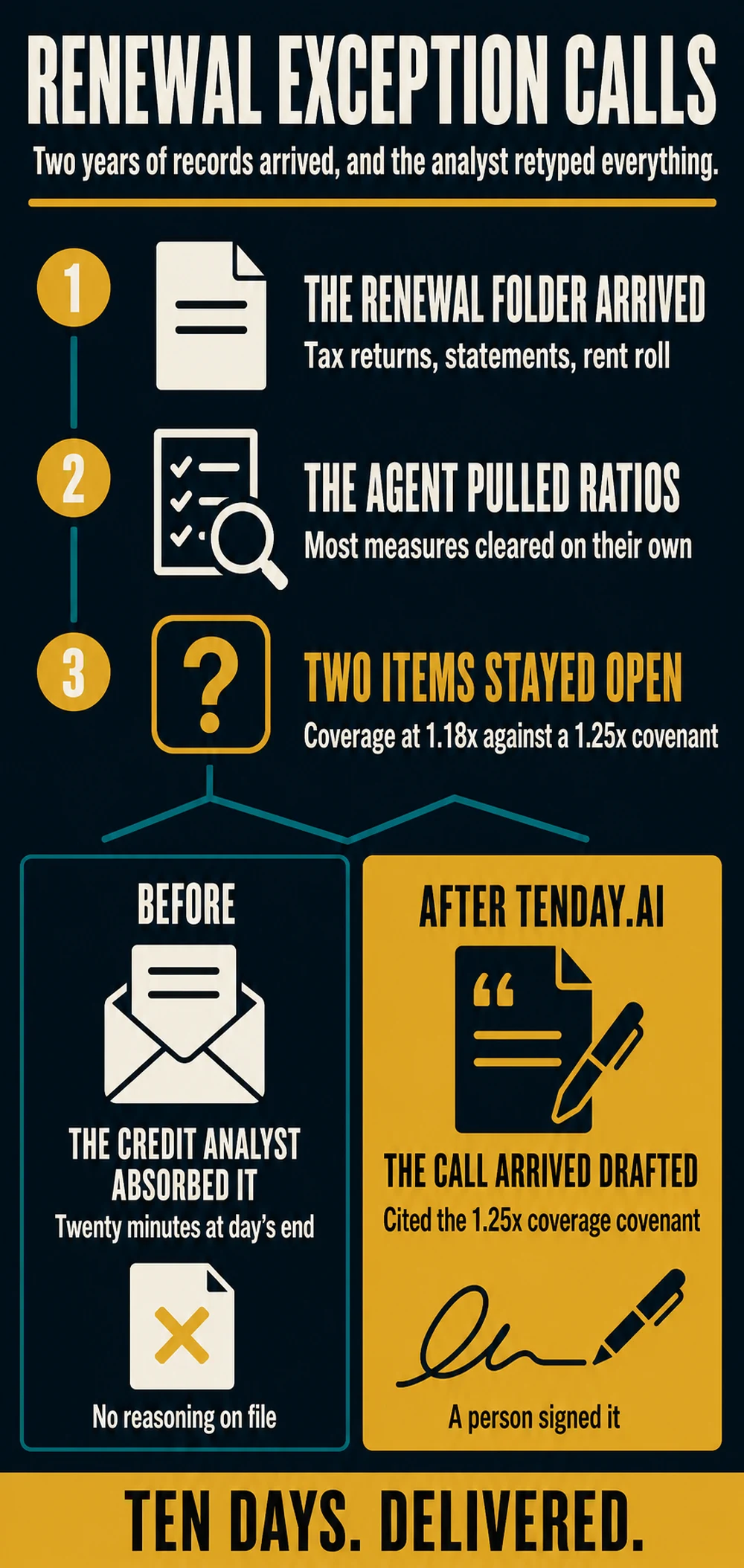
A borrower's renewal folder arrives as two years of tax returns, a bookkeeper's statements and a scanned rent roll. No two folders arrive in the same shape. The credit analyst retypes all of it by hand before any credit thinking starts.
The gap
The agent stops where the shortfall has a story behind it. One equipment purchase paid out of operating cash produces a coverage miss. So does a business that is quietly fading. On paper the two read identically, and only one still renews at current terms. Telling them apart is the analyst's call. Today it gets twenty minutes at the end of a day that started at eight. The ratio work ate the rest.
Where the tools stop
Four vendors now draft the recommendation itself. That is a real step past spreading. Every one of them sits behind a demo request. A bank runs a full sales cycle to learn whether the fix is affordable. Where the pricing shape leaks out, it reads like an enterprise contract: a monthly minimum plus per-document overage. It is not a fixed piece of work a small institution can budget on one line.
Auto-drafts a credit memo with a Recommended Action section, and builds covenant pass, fail and exception flags into it. The closest thing in the market to the judgment call itself.
Produces a memo carrying a recommended decision, and flags covenant concerns and policy exceptions. Its own site frames the output as advisory rather than final.
Claims credit recommendations alongside ratio analysis and a default-risk assessment.
The Underwriting Superagent drafts a board-ready memo with a recommendation for approval or conditional approval, plus a proposed deal structure.
Spreads tax returns into ratios, quickly and well, and stops there. The credit thinking starts after it finishes.
Watches covenant headroom and issues breach alerts, then explicitly leaves the officer assessment field blank for a person to fill in.
What changes
The agent reads the borrower's submitted documents in whatever format they arrive: clean PDFs, scans, a spreadsheet the borrower built. It produces the spread. It reads that specific loan's covenant language and the bank's credit policy, then checks the spread against both. It drafts a renewal or exception recommendation with a cited reason and a confidence number. The analyst reviews it, corrects or overrides it, and signs. The agent never touches the loan file, the core system or committee.
Drafted recommendation, awaiting signature
What the engagement needs
The borrower's submitted financial documents, as files or as email. The covenant language for that specific loan. The bank's written credit policy. The analyst reads the draft, corrects or overrides it, and signs it. Nothing renews and nothing gets flagged without that signature. This is regulated data. Nothing here substitutes for the bank's own data handling and exam controls.
The whole thing
Honest limits
Covenant language is not standardised across loan agreements. Document formats are not standardised across borrowers. Mapping both correctly is harder than the spreading step alone. It is also the part most likely to run past ten days. The scoping conversation has to settle two questions first. How bespoke is this bank's covenant language? How much document variety does one analyst really see? Both settle before the scope is committed.
Aloan is closest to closing this gap. It already drafts a recommended action with covenant pass, fail and exception flags attached. Aloan, RiskInMind, Crediflow AI and Uptiq all route every prospect through a sales call. If any of them publishes a tier sized for a small institution, the reason to build this narrows fast. That is a live possibility, not a ruled-out one.
The vendor descriptions come from published material and vendor site language, not from hands-on trials.
More use cases
Three weeks from the Form 5498 deadline, an analyst works down a stack of valuation files. In March it was a trickle. An appraisal, a K-1, a sponsor letter, a purchase agreement nobody has updated in three years.
A field auditor walks a dealer lot on a fixed cycle. The auditor photographs units and checks serials against what the dealer still owes. Most days it is clean. Then a unit is not where the schedule says it should be. The dealer's explanation sounds plausible.
A regional downturn does not send one default notice. It sends a run of them inside the same few weeks. Every one waits for an examiner to read the bond. Until then, nobody knows which are fast denies and which are full investigations.