From a request a business posted
Bank and card transactions matched to the books
The bookkeeper codes every bank and card line by hand, then chases the owner about the charges nobody explained.
E-commerce bookkeeping
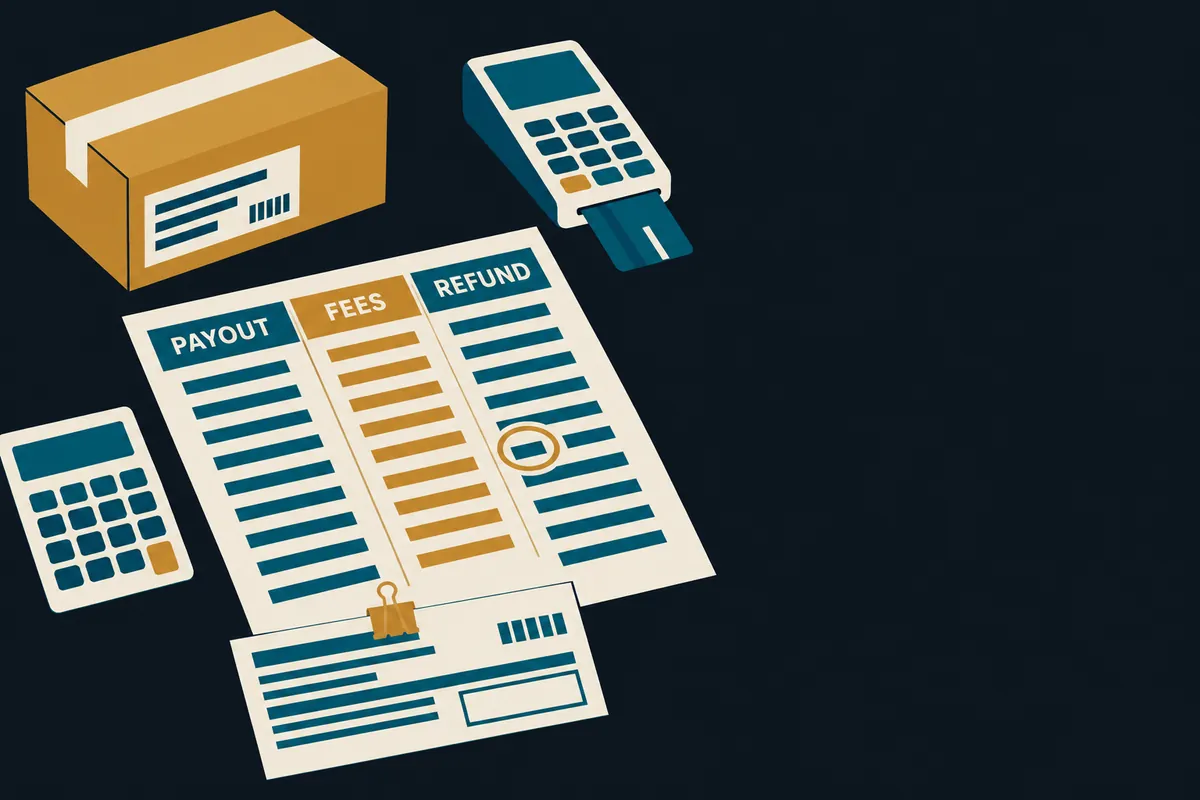
An online seller's books take in deposits from Shopify, Amazon, PayPal and Square, and none of them arrive as plain sales. An Amazon settlement nets out fees, refunds and a held reserve, so the bookkeeper rebuilds it line by line in a spreadsheet before it matches the bank.
Who does what
What you get
Draft for review
The rules it follows
These are your company's own rules, written down and confirmed with your team during the build. It works on its own only within limits you set.
What it learns when your team adjusts its work
The busywork it takes off the bookkeeper. It takes off the bookkeeper the line-by-line rebuild of every payout in a spreadsheet before it can be posted. That time goes back to the work only they can do.
What it starts out knowing
It works from these sources, shows which one an answer came from, and asks when the answer is not there.
Who reviews its work, and when review can stop
The bookkeeper reviews every entry at first. Review stops for a routine payout type, such as a daily Shopify payout, once its record on that type is good and the firm agrees.
Unknown adjustments, chargebacks, sales tax and anything the client needs to be asked about keep going to the bookkeeper.
It no longer needs review once its record on them is good and you agree, one type of task at a time. New, unusual and high-stakes work stays with a person.
When your team adjusts its work
When the bookkeeper changes how an Amazon reserve release was booked, moving it from sales to the Amazon clearing account, the change is saved as a rule for that client, and the next settlement books the release to the clearing account. The bookkeeper decides whether a change becomes a rule, an example or a one-time exception.
It learns how your company does this job. It does not watch, rate or profile your employees. Your team decides what it learns. You can read everything it has learned and remove anything. Whoever runs it, your team or our engineers, makes sure on a regular cycle that what it learned stays inside the bounds you agreed.
From a request a business posted
A bookkeeper working a client's books found that the PayPal connection and the manual entries were both landing, so income and expenses showed up twice. Square added a flood of small charges that had to be folded into each day's card and cash totals. The bookkeeper could not tell whether to keep the app connections or the hand-keyed deposits, and asked others how they keep the two from colliding.
Paraphrased from a public post, not quoted, and not a client engagement.
From first principles
Before we build anything, we take the work down to what has to be true. What is left over is habit. Habit gets deleted, not automated.
What has to be true
What is only habit
Re-entering each payout into a spreadsheet before posting it is habit, not a requirement. So is keeping both the app connection and a manual deposit entry just in case one misses something.
What we delete before building anything
We remove the duplicate path first: each channel gets one way into the books, either its connection or the payout entry, never both. We drop the side spreadsheet once the payout entry carries the same split.
What is left
The agent. We build an agent that reads each payout report, splits it by the client's own booking rules, matches it to the bank deposit and drafts the entry in QuickBooks Online. For bookkeeping firms, this can become a service they offer their e-commerce clients.
A person. The bookkeeper approves the entries, decides lines the agent cannot place, and owns sales tax and anything that touches the client's tax position.
The kind of work: Checking and matching. Checking and matching is the work of holding one record against another: a bank line against the books, a delivery ticket against an invoice, a payout against the sales behind it, a customer's request against the price list. People still do it by hand because the records never line up exactly, and someone has to decide what each mismatch means.
What the engagement needs
Read access to each sales channel's payout and settlement reports, the bank feed, and draft-entry access in the client's QuickBooks Online file. We also need the client's chart of accounts, a few months of booked payouts as examples, and the firm's notes on how each channel is handled.
We check the time this job takes, access to your systems and how you would review the result. If a ready-made tool is enough, we say so.
Senior engineers agree the rules with the bookkeeper, test on past cases and set approval limits and a way to switch it off.
Work with the agent in Slack, Teams or text messages. We fix problems and adjust it as unusual cases come up.
You own the agent and keep its source, tests and guide either way. Your team runs it, or our engineers run it with a monthly report. Learning continues on your own servers, in your own cloud account or in our data center.
When we'd point you elsewhere
The fit test checks this first. If one of these covers your case, we tell you, and you keep the map of the work.
Honest limits
It does not decide sales tax across states or currency treatment for tax purposes; those stay with the bookkeeper or the CPA.
The situation on this page is drawn from a public request a business posted, paraphrased, not a client engagement.
More use cases
From a request a business posted
The bookkeeper codes every bank and card line by hand, then chases the owner about the charges nobody explained.
From a request a business posted
Month-end reconciliation of PODs and scale tickets against invoices, chasing lost paperwork and weights that do not match the load.
From a request a business posted
Re-typing every line of a customer's PDF request, hunting each part in the catalog, then looking up the approved price.