From a request a business posted
Renewals and rate increases caught early
Account managers scan renewal spreadsheets line by line, hunting for rate increases before the insured opens the renewal notice.
Short-term rentals
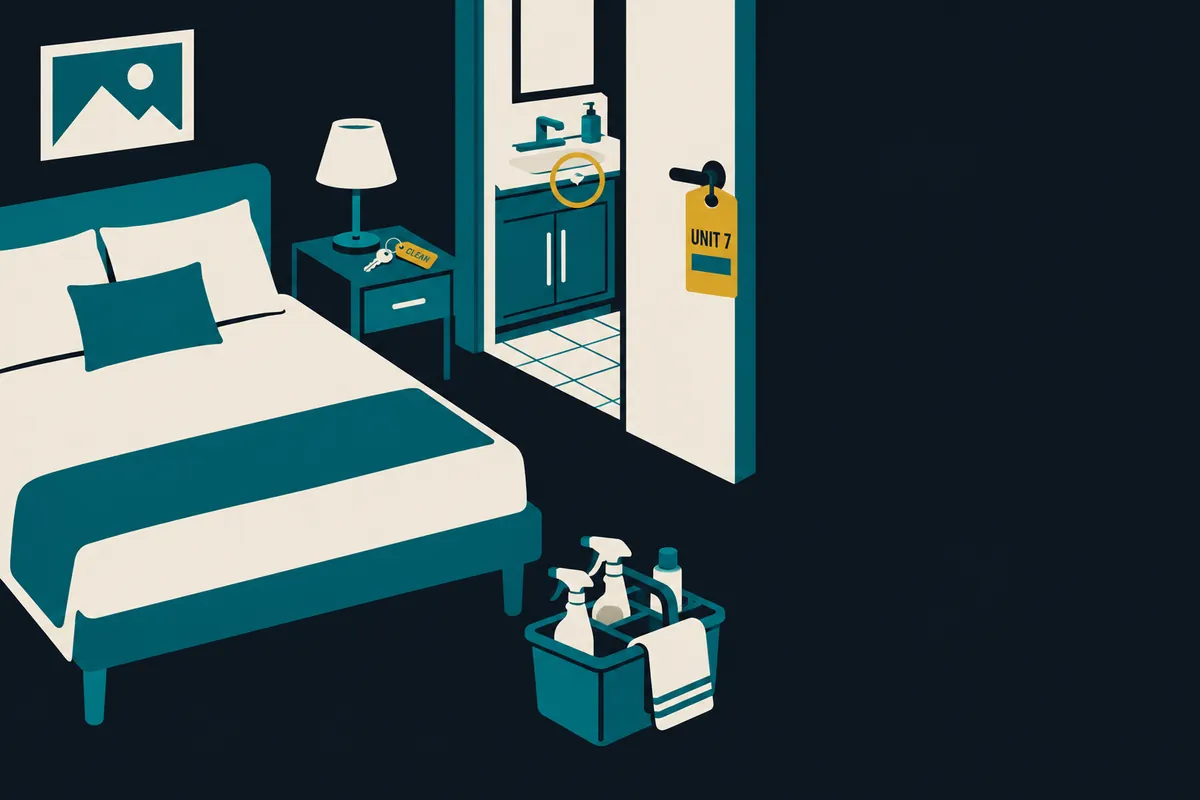
Every checkout starts a cleaning, a checklist and a set of photos, and someone has to look at all of it before the next guest arrives. A 25-unit operator planning to grow past 100 units saw that this review would soon fill a whole day.
Who does what
What you get
Draft for review
The rules it follows
These are your company's own rules, written down and confirmed with your team during the build. It works on its own only within limits you set.
What it learns when your team adjusts its work
The busywork it takes off the operations manager. It takes over opening every turnover task, chasing missing photos and checking routine photo sets that show nothing new. That time goes back to the work only they can do.
What it starts out knowing
It works from these sources, shows which one an answer came from, and asks when the answer is not there.
Who reviews its work, and when review can stop
At first the operations manager reviews every turnover the agent drafts. Review stops for a routine type, such as complete checklists with no new damage, once the agent's record on them is good and the operator agrees.
Holds, repair spending and damage claims keep going to the operations manager.
It no longer needs review once its record on them is good and you agree, one type of task at a time. New, unusual and high-stakes work stays with a person.
When your team adjusts its work
When the operations manager changes a hold to ready because a worn rug in Unit 12 is known and already scheduled for replacement, the manager saves that as an exception for Unit 12, and next time the agent notes the rug without holding the unit. The manager decides whether the change is saved and in what form.
It learns how your company does this job. It does not watch, rate or profile your employees. Your team decides what it learns. You can read everything it has learned and remove anything. Whoever runs it, your team or our engineers, makes sure on a regular cycle that what it learned stays inside the bounds you agreed.
From a request a business posted
The operator wanted each checkout in the property system to open the cleaning task on its own, with a form already filled in for that unit. Cleaners would return a checklist and photos, the photos would be checked, and the unit status and staff messages would follow from the result. The operator expected to scale past 100 units and wanted the setup to hold up.
Paraphrased from a public post, not quoted, and not a client engagement.
From first principles
Before we build anything, we take the work down to what has to be true. What is left over is habit. Habit gets deleted, not automated.
What has to be true
What is only habit
A manager scrolls through every photo set, even when the checklist is complete and nothing changed since the last clean. Units are often marked ready in the PMS by hand after a message from the cleaner.
What we delete before building anything
We delete the full photo scroll for routine turnovers and the habit of re-entering the cleaner's message as a status in the property system.
What is left
The agent. The agent opens the cleaning task on checkout, checks the returned checklist and photos against the unit's last clean set, and drafts the ready or hold status. It messages the cleaner about missing items and flags anything new.
A person. The operations manager decides every hold, every repair that costs money, and every damage claim against a guest.
The kind of work: Follow-ups and deadlines. This is the work of noticing that a date is coming or something has changed, then getting the right person to act before it is too late. EZLynx, AppFolio and the city's DOB and HPD records already hold the dates, but people still read them line by line, re-enter them into spreadsheets and decide by hand who needs a follow-up.
What the engagement needs
The engagement needs the property system's checkout and arrival events, the cleaning checklists by unit, and access to where the cleaners' photos land. A set of past turnovers shows what normal looks like for each unit. The operator sets what may clear on its own and what always goes to a person.
We check the time this job takes, access to your systems and how you would review the result. If a ready-made tool is enough, we say so.
Senior engineers agree the rules with the operations manager, test on past cases and set approval limits and a way to switch it off.
Work with the agent in Slack, Teams or text messages. We fix problems and adjust it as unusual cases come up.
You own the agent and keep its source, tests and guide either way. Your team runs it, or our engineers run it with a monthly report. Learning continues on your own servers, in your own cloud account or in our data center.
When we'd point you elsewhere
The fit test checks this first. If one of these covers your case, we tell you, and you keep the map of the work.
Honest limits
Photo quality limits the review. Dark or partial photos produce more holds for a person, not better drafts.
The situation on this page is drawn from a public request a rental operator posted while looking for help, paraphrased here. It is not a client engagement.
More use cases
From a request a business posted
Account managers scan renewal spreadsheets line by line, hunting for rate increases before the insured opens the renewal notice.
From a request a business posted
Hours go to checking DOB and HPD records building by building and re-entering inspection dates into spreadsheets and calendar reminders.